
The South African citrus mealybug, Delottococcus aberiae, is a mealybug that does something in citrus that similar species do not: it deforms the fruit or stunts its size until it can no longer be sold. The problem is that the damage happens very early, when the fruit is tiny, and by the time it is clearly visible it can no longer be put right. This article summarises how to recognise it, when to look and how to organise monitoring on your farm, based on information published by the official plant health services.
How to recognise it
According to the information sheet from the Plant Health Service of the Junta de Andalucía (the regional government of Andalusia), adult females are oval, about 2.5 to 5 mm long, covered in a whitish waxy layer and with 18 pairs of lateral filaments; the last pair, the anal one, is slightly longer. The male is winged and small, ranging in colour from light orange to reddish brown.
In its early stages it can be confused with other mealybugs common in citrus, such as Planococcus citri or Pseudococcus longispinus. If you find mealybugs on young fruit and are unsure of the species, do not assume: take a sample and check with your adviser or the plant health service.
Where to look:
- On leaves and on fruit from the moment it forms.
- Under the calyx of newly set fruit.
- Between fruits that touch each other.
- On the trunk, main branches and trunk base, where some females migrate to lay their eggs.
Symptoms and timing of the damage
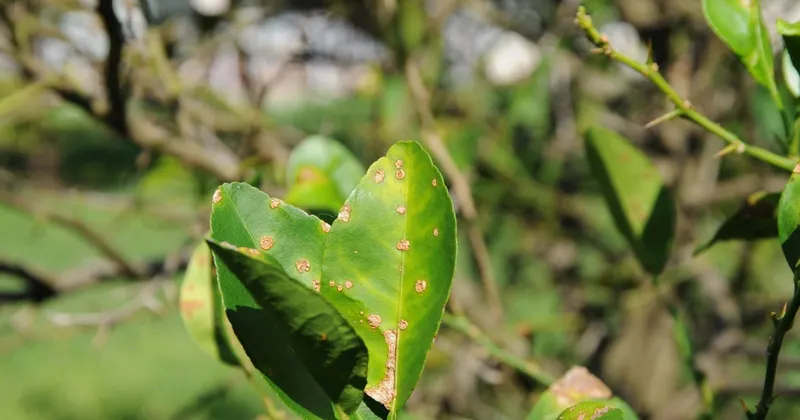
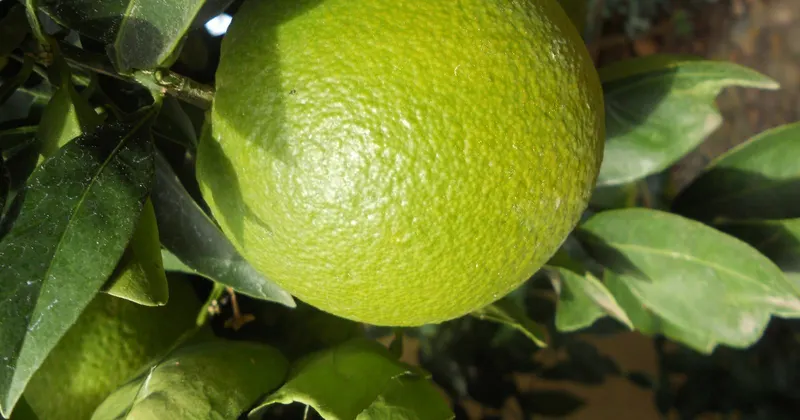
The damage occurs from flowering until the fruit reaches about 2 or 3 cm. Beyond that size, the pest no longer causes deformations, even if it is still present. Symptoms vary by variety, according to the same sheet:
| Group | Usual symptom |
|---|---|
| Clementines | Reduced fruit size |
| Navel | Deformations or bulges around the stalk |
| All | Honeydew, sooty mould and attraction of caterpillars that damage the skin |
All citrus varieties are considered susceptible. The Action Plan of the Ministry of Agriculture also warns that the deformations should not be confused with those caused by the citrus bud mite.
When and how to monitor
Official sources agree on two scouting periods with different aims:
- Spring, from petal fall until the fruit measures 3 or 4 cm: this is the monitoring that serves to prevent damage. Look for the pest on newly set fruit, under the calyx and between fruits in contact, to establish its density and distribution before any damage appears.
- Summer: symptoms are more obvious and it is easier to delimit the affected areas. The damage is already done, so the information is used to reduce populations and plan the following season.
To make monitoring useful:
- Check a fixed number of trees and fruits per plot, spread across the whole area.
- Pay attention to trees close to where harvest crates are stored, which the Andalusian sheet identifies as the main route of spread.
- Watch other host plants that share space with the citrus, such as olive trees or ornamental species.
- Note the fruit's phenological stage at each check, because it shows whether damage is still possible.
- Record the presence of natural enemies, such as the parasitoid Anagyrus aberiae or the ladybird Cryptolaemus montrouzieri.
The decision to intervene and the right timing should come from your adviser and the alert bulletins of your region. This article does not cover products or doses.
Measures to stop it spreading
The pest's natural dispersal is low, but it moves easily with machinery, crates and plant material. The Junta de Andalucía sheet recommends, among other measures:
- Using single-use crates and containers or disinfesting them properly.
- Organising fieldwork and harvesting so that you do not enter a clean plot after an affected one.
- Disinfesting machinery after each use.
- Applying hygiene measures to workers' clothing.
- Keeping ground cover, which favours generalist predators.
- Reporting to the plant health services of your region any suspected presence in areas where it has not been recorded.
These measures only work if the whole team knows which plots are affected. An up-to-date map of the outbreaks is the simplest tool for organising the order in which crews and machines enter.
Common mistakes
- Waiting to see deformed fruit before starting to look. By then the damage for that season can no longer be avoided.
- Confusing it with other mealybugs and applying the wrong approach.
- Not noting where the outbreaks are, so that the following year you start from scratch.
- Moving crates between farms without control.
- Not recording beneficial fauna, which can change the decision.
A record carried over from one season to the next is what helps most with this pest. For example, if you know which plots had deformed fruit last summer and in which areas of each, next spring's scouting can start right there, at the point when damage can still be avoided.
Monitoring the mealybug in Agrimaps
Agrimaps has a specific assessment for citrus: the Clareta and Delottococcus lesion assessment, with which you evaluate the lesions you consider most important. It is complemented by the final fruit assessment based on the lesions left by pests and by the calyx assessment according to the variety in your plots.
With pest sampling you track the state of the pest in each plot against a minimum and maximum threshold and see how treatments affect it. And each outbreak you find can be saved as a geolocated note at its exact point, so that the whole team knows which areas to avoid or check and can reach them using the Google Maps route.