
Alternaria brown spot of citrus, caused by the fungus Alternaria alternata, can defoliate trees, cause young fruit to drop and leave the remaining fruit with no commercial value. What makes it hard to manage is that it depends heavily on the weather: a period of rain or prolonged humidity at the susceptible stage is enough for infections to take off. This article explains which varieties to watch, when, what to look for and how to keep a record so you can make decisions based on data.
Which varieties to watch
Alternaria does not affect all citrus equally. The most susceptible are hybrid mandarins, including Fortune, Nova, Clemenvilla, Murcott and the Minneola tangelo, according to the fact sheets from plant health services and alert networks. Clementines and oranges are usually much less affected.
If your farm has several varieties, you do not need to monitor them all with the same intensity. Identify the plots with susceptible varieties and focus on them. Also take into account plots with dense foliage, poor airflow or low-lying areas where humidity lingers for longer.
When the risk increases
The fungus needs two things at the same time: young tissue and humidity.
- Young tissue: new flushes and newly set fruit are the most susceptible organs. As the leaf and fruit mature, susceptibility drops.
- Humidity: rain, dew or fog that keeps the leaf surface wet for hours, especially at mild or warm temperatures.
That is why monitoring periods coincide with the spring, summer and autumn flushes, and with the weeks after fruit set, especially if they come with rain. Plant health alert networks publish warnings when conditions are favourable in each area: follow them throughout the whole season.
What to look for in the plot
The most characteristic symptoms are:
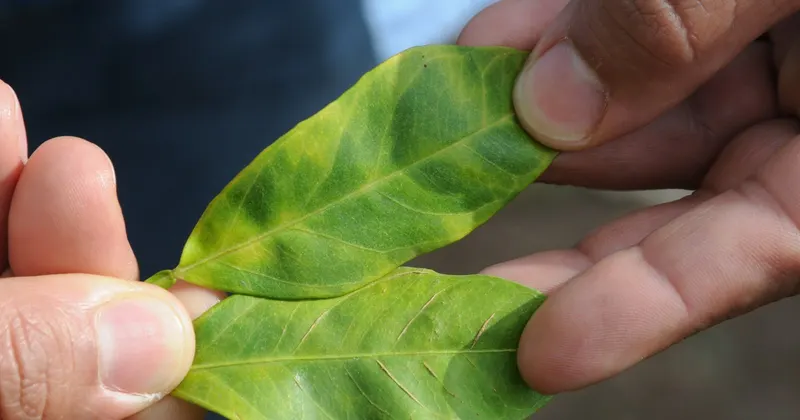
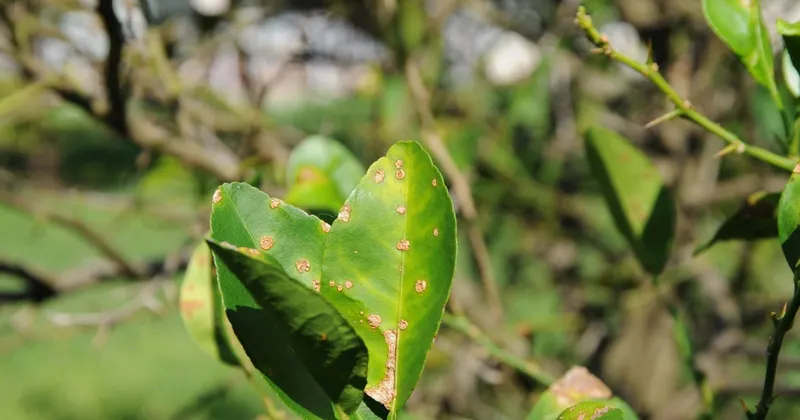
- On young leaves: dark brown necrotic spots, often surrounded by a yellow halo, which can spread along the veins. Heavily affected leaves drop.
- On shoots: necrosis of tender stems and defoliation of the flush.
- On newly set fruit: small black spots that can develop and cause necrosis of the whole fruit, which ends up dropping.
- On developed fruit: lesions of varying size, sometimes with a corky appearance, which lower the value of the fruit.
Other problems can be confused with these symptoms, such as wind damage, phytotoxicity or scorching. If in doubt, take photos, collect samples and consult your adviser or the plant health service.
How to record your monitoring
A good Alternaria record combines three types of information: the state of the crop, the weather and what is observed in the plot.
- Phenological stage: note when each flush starts and when fruit set occurs in each susceptible plot.
- Weather: record episodes of rain and prolonged humidity, or check the data from the nearest agroclimatic station.
- Observations: on each visit, check a fixed number of shoots and fruits spread across the plot and note how many show symptoms. Always use the same method so you can compare.
- Location: if symptoms appear in a specific area, mark it on the map. These areas tend to coincide with damper spots or those with less ventilation.
- Measures taken: any treatment or cultural practice, with date, plot and person responsible.
- Follow-up check: a later inspection to see whether the new flushes come through clean.
Example of a visit sheet
| Field | Example |
|---|---|
| Plot and variety | Plot 3, susceptible hybrid mandarin |
| Phenological stage | Spring flush, newly set fruit |
| Weather in the previous days | Rain and several mornings with dew |
| Organs checked | A fixed number of shoots and fruits per plot |
| Organs with symptoms | Number or percentage observed |
| Area with most symptoms | Point marked on the map |
| Next step | Consult the adviser and revisit |
Decisions on whether to intervene and how depend on the variety, the plot's history and the conditions of each year. This article does not cover products or doses: that decision rests with your adviser, following the criteria of the integrated pest management guide for citrus from the Ministerio de Agricultura (Spanish Ministry of Agriculture) and the warnings for your area.
Cultural measures worth recording
Some practices reduce the risk because they shorten the time the foliage stays wet or remove inoculum. If you carry them out, record them, because they are part of integrated management:
- Pruning to improve airflow inside the tree.
- Irrigation management so the canopy is not kept wet.
- Control of vigour and fertilisation to avoid excessive flushes.
- Removal of heavily affected plant material, when the adviser recommends it.
Common mistakes
- Monitoring only once symptoms are already present: with Alternaria the key moment comes earlier, when flushes or young fruit coincide with humidity.
- Checking all plots equally and spending little time on susceptible varieties.
- Not noting rain or dew, so you cannot later link an infection to the episode that caused it.
- Forgetting the summer and autumn flushes, which can also become infected if the weather is right.
- Not keeping a history for each plot: those that had problems in one season usually need more attention in the next.
Alternaria alerts in Agrimaps
Agrimaps includes Alternaria alerts: it sends real-time notifications when the risk of its presence rises based on weather conditions. It is an aid to know when it is time to check susceptible plots, not a substitute for the visit.
In pest sampling and monitoring you keep track of the health status of each plot, and the phenological stage studies let you compare the current flowering with that of previous seasons. For citrus farms, Agrimaps also offers final fruit assessment based on the lesions left by pests and calyx assessment by variety. And if you find an outbreak, you can leave it as a geolocated note at the exact point in the plot.