
A burst pipe, a patch of weeds, some gaps in the planting or the first sign of a pest outbreak. Things happen on a farm every day, and most of them are passed on by word of mouth or with a photo sent by messaging app that nobody can find the following week. If an issue is not properly documented, it is not resolved, or it is resolved late. This article explains how to take useful photos, what to write in the note and how to organise issues so that each one has an owner and a closing date.
What a well-documented issue needs
Anyone who reads it, even if they were not there, should be able to answer five questions:
- What has happened: type of issue and a brief description.
- Where: farm, plot and exact spot.
- When it was spotted.
- Who spotted it and who needs to deal with it.
- What status it is in: pending or resolved.
If any of these answers is missing, the issue ends up going round in circles: someone goes to look for it and cannot find it, or it gets fixed and nobody knows.
How to take photos that help
A badly taken photo means going back out to the field. A few simple guidelines:
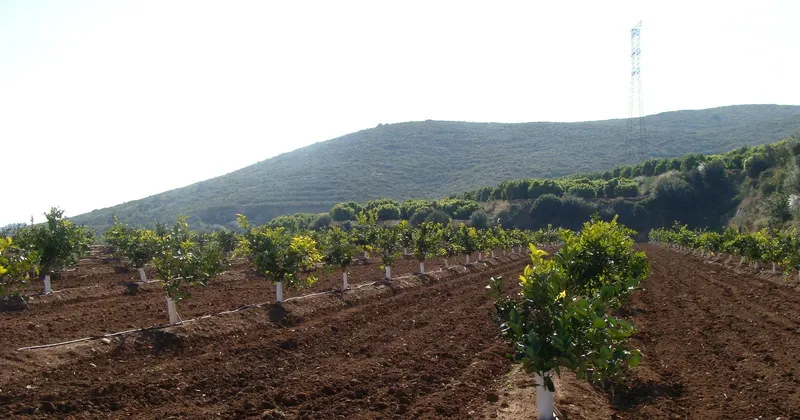
- Take three photos, not one: a wide shot that shows the location (the row, the tree, the irrigation head), a medium shot of the problem and a close-up of the detail.
- Include something for scale in the close-ups: a coin, a pen or your hand.
- Mind the light: avoid shooting into the sun and, with leaves or fruit, look for shade so the symptoms show up clearly.
- Focus properly before you shoot. With small insects, move the phone closer bit by bit until it focuses.
- Show the underside if the problem is on the leaf: many pests and symptoms are visible from below.
- Retake the photo from the same spot when you return, so you can see how things have changed.
What to write in the note
The photo shows, but the note explains. Write short, specific sentences, with the reader in mind:
| Poor note | Useful note |
|---|---|
| “Water leak” | “Dripper torn out in row 12, around tree 30. Large puddle. The section needs replacing” |
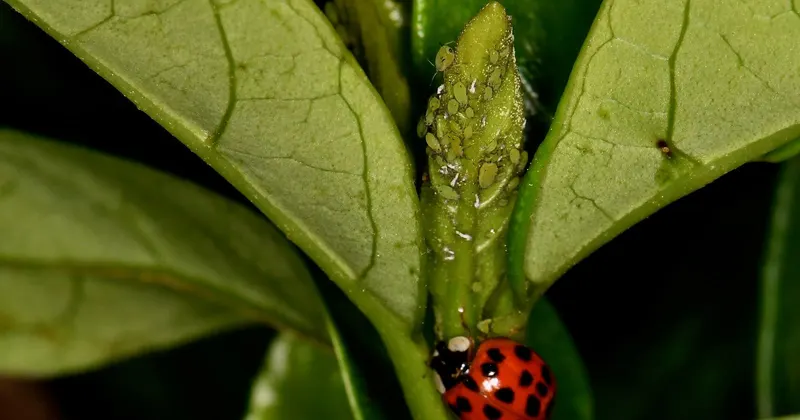
| “Bugs” | “Aphid colonies on tender shoots, south side of 4 or 5 trees. A few ladybirds” |
| “Weeds” | “Patch of tall weeds next to the track, about 20 metres. Before harvest” |
| “Tree bad” | “Dead tree in row 3. Possible gap to be replanted” |
Classify each note with a fixed type, always the same one for the same problem: pest alert, weeds, maintenance, gaps in the planting or other, for example. That way you can filter later and see, for instance, all the pending maintenance issues.
Pinpointing the issue on the map
“At the far end of the plot” is not a location. On large farms, or when someone else will be resolving the issue, the exact position saves a lot of time. Ideally, the note stores the coordinates of the spot where it was made, so that whoever goes to fix it can get there using the navigation app on their phone.
What is more, seeing all the issues on the farm map reveals patterns that a list does not show: pest outbreaks that recur in the same area, faults concentrated in one irrigation sector or gaps in a strip with soil problems.
From note to solution
Documenting is pointless if the issue is not closed. A simple workflow:
- Whoever spots it creates the note with a photo, type and location.
- The supervisor reviews it and decides who will deal with it.
- Whoever resolves it goes to the spot, takes action and marks it as resolved, ideally with a photo of the result.
- Pending issues are reviewed regularly so that none is forgotten.
If the issue is a pest, the note does not replace sampling: it is the alert that triggers sampling of the plot using the appropriate method.
Example of a day in the field
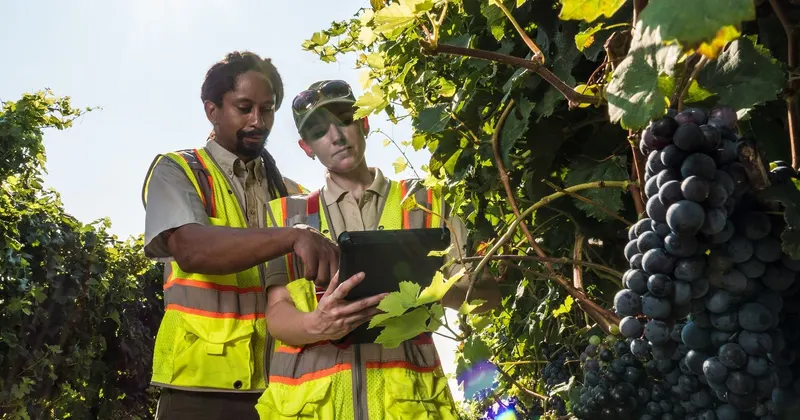
For example, the supervisor walks round a citrus farm first thing in the morning. In plot 2 they see a dripper torn out and create a maintenance note with three photos. In plot 5 they see shoots with aphids and create a pest alert. On returning, they review the list: they assign the fault to the irrigation manager, who gets to the spot using the navigation app and marks it as resolved that same day, and they notify the technician so that plot 5 is sampled. By the end of the week, the pending list contains only what is genuinely still open.
Which issues are worth recording
Not everything needs a note, but a note takes little effort, while reconstructing something that was not written down takes a lot. It is worth recording:
- First symptoms of pests or diseases, even if they seem isolated.
- Irrigation faults, leaks and blocked drippers.
- Gaps in the planting and trees that should be replaced.
- Patches of hard-to-control weeds.
- Damage from hail, wind or frost, with photos taken the same day.
- Problems with tracks, fences or access points.
Damage from weather events is a special case: dated, geolocated photos can be useful if you later have to justify the damage to third parties.
Common mistakes
- Loose photos on a personal phone or in a messaging group.
- Notes with no location or with a vague one.
- Not marking issues as resolved, so the list loses its value.
- Using different types for the same problem.
Geolocated notes with Agrimaps
The geolocated notes in Agrimaps are designed for exactly this: reporting any issue visually and with the exact place where it occurred. You have separate notes for each of your farms, you can review issues and mark them as resolved, and the Google Maps integration gives you the nearest route to the spot where the issue is.
To use them, you need to be a customer of Infonet Consultores' Recodat system; up to 10 terminals and 100 geolocated notes, shared between all of them, can be used free of charge. If the issue is a pest, follow-up continues in pest sampling. You will find more details in the frequently asked questions.